Hormone Balancing Diet for Women: Foods & Daily Habits
Hormones quietly influence almost every part of a woman’s health—energy levels, digestion, mood, sleep, weight, skin, hair, and even how hungry or calm you feel during the day. When hormones are balanced, the body feels steady and resilient. When they’re not, symptoms often appear slowly and then all at once.
Many women are told that hormone issues are “normal,” something to tolerate or wait out. But in reality, daily food choices play a powerful role in hormone balance. Not through extreme dieting or rigid rules, but through consistent nourishment that supports how the body actually works.
This guide explains how a hormone balancing diet works, which foods matter most, and how to build meals that support hormonal health in a realistic, sustainable way.
What Hormone Balance Really Means for Women
Hormone balance does not mean having “perfect” levels or eliminating natural cycles. Hormones fluctuate by design. Balance means that your body can produce, use, and clear hormones efficiently without constant stress signals.
When this process is supported, many women notice:
- More stable energy throughout the day
- Fewer cravings and crashes
- Improved digestion
- Better sleep quality
- Clearer skin and healthier hair
- Easier weight management
A hormone balancing diet focuses on supporting the systems that regulate hormones, rather than targeting one hormone in isolation.
How Food Influences Hormones
Hormones are chemical messengers made from nutrients. Every hormone-related process depends on what you eat, how often you eat, and how well your body can digest and absorb nutrients.
Food affects hormones in four key ways:
1. Blood Sugar Regulation
Blood sugar swings are one of the fastest ways to disrupt hormonal balance. Frequent spikes trigger insulin, which can influence estrogen, cortisol, and fat storage hormones.
2. Inflammation Levels
Chronic low-grade inflammation interferes with hormone signaling and detoxification. Anti-inflammatory foods help restore balance.
3. Liver Detox Support
The liver plays a major role in breaking down and clearing used hormones. Without proper nutrition, hormones can recirculate instead of being eliminated.
4. Stress Response
Undereating, skipping meals, or nutrient deficiencies signal stress to the body. This raises cortisol, which disrupts other hormones downstream.
A hormone balancing diet supports all four areas gently and consistently.
Signs Your Diet May Be Affecting Hormone Balance
Hormonal imbalance doesn’t look the same for everyone, but common diet-related signs include:
- Energy crashes between meals
- Strong sugar or carb cravings
- Bloating or irregular digestion
- Difficulty losing weight despite effort
- Poor sleep or wired-but-tired feeling
- Skin breakouts or hair thinning
These are not failures of willpower. They are signals from the body asking for better support.
Core Principles of a Hormone Balancing Diet
Rather than focusing on restrictions, this approach emphasizes addition and consistency.
Eat Regular, Balanced Meals
Skipping meals or eating too little can elevate stress hormones. Regular meals help stabilize blood sugar and reduce hormonal strain.
Prioritize Protein at Every Meal
Protein provides the building blocks for hormone production and keeps blood sugar steady.
Include Healthy Fats Daily
Hormones are made from fats. Avoiding fat can impair hormone synthesis and absorption of fat-soluble vitamins.
Choose Whole, Fiber-Rich Foods
Fiber helps remove excess hormones from the body and supports gut health.
Reduce Ultra-Processed Foods
Highly refined foods can disrupt blood sugar and increase inflammation.
Best Foods for Hormone Balance
1. High-Quality Protein Sources
Protein supports hormone production, appetite regulation, and metabolic health.
Examples include:
- Eggs
- Fish and seafood
- Poultry
- Lentils and beans
- Greek yogurt or fermented dairy
Aim for protein at breakfast, lunch, and dinner.
2. Healthy Fats That Support Hormones
Dietary fat is essential for hormone synthesis and nervous system balance.
Helpful fats include:
- Olive oil
- Avocados
- Nuts and seeds
- Fatty fish
- Coconut oil in moderation
These fats also improve satiety and reduce cravings.
3. Fiber-Rich Carbohydrates
Fiber helps bind excess hormones in the gut and supports stable blood sugar.
Include:
- Vegetables of all colors
- Berries and whole fruits
- Oats, quinoa, and brown rice
- Beans and lentils
Avoid cutting carbs too low, which can raise cortisol.
4. Cruciferous Vegetables
These support estrogen metabolism and liver detox pathways.
Examples:
- Broccoli
- Cauliflower
- Brussels sprouts
- Kale
- Cabbage
Light cooking improves digestibility for many women.
5. Mineral-Rich Foods
Certain minerals are especially important for hormone regulation.
Key nutrients include:
- Magnesium (leafy greens, nuts, seeds)
- Zinc (pumpkin seeds, legumes, seafood)
- Iron (lentils, spinach, eggs, meats)
Mineral deficiencies often show up as fatigue, cravings, or irregular cycles.
Foods That May Disrupt Hormone Balance When Overused
Hormone balance is not about perfection, but awareness helps.
Limit excessive intake of:
- Sugary snacks and drinks
- Refined flours
- Highly processed oils
- Constant caffeine on an empty stomach
These can stress blood sugar and cortisol over time.
Hormone-Balancing Meal Structure
A simple template for meals:
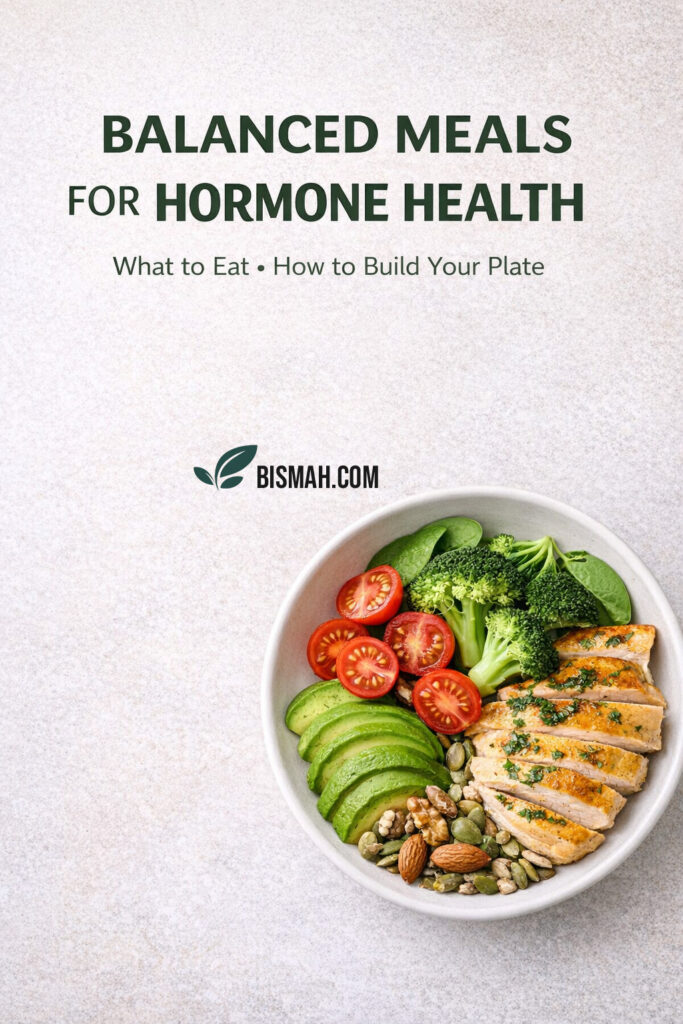
Protein + Fiber + Healthy Fat
For example:
- Protein: eggs, fish, legumes
- Fiber: vegetables, whole grains
- Fat: olive oil, seeds, avocado
This structure helps prevent blood sugar spikes and keeps hormones steady.
Why Breakfast Matters for Hormones
Skipping breakfast or eating a sugar-heavy meal can elevate cortisol and disrupt insulin signaling.
A hormone-friendly breakfast includes:
- Protein (eggs, yogurt, smoothie with protein)
- Fiber (fruit, oats, seeds)
- Healthy fat (nuts, seeds, olive oil)
This sets a stable tone for the rest of the day.
Hormone-Friendly Snacks (When Needed)
Snacks are not mandatory, but when hunger appears between meals, choose options that stabilize blood sugar.
Balanced snack ideas:
- Greek yogurt with seeds
- Apple with nut butter
- Hummus with vegetables
- Cottage cheese with berries
Avoid snacks made only of sugar or refined carbs.
The Role of Gut Health in Hormone Balance
Hormones and gut health are closely linked. The gut helps metabolize estrogen and influences inflammation and immunity.
To support this connection:
- Eat diverse plant foods
- Include fermented foods regularly
- Chew food thoroughly
- Avoid chronic under-eating
A healthy gut supports clearer hormone signaling.
Stress, Cortisol, and Diet
Even a “healthy” diet can backfire if it’s too restrictive.
Chronic stress combined with:
- Skipping meals
- Cutting calories too low
- Avoiding entire food groups
can raise cortisol and disrupt hormones.
A hormone balancing diet is nourishing, not punishing.
How Long Does It Take to See Results?
Hormone balance improves gradually. Many women notice:
- Better energy within 1–2 weeks
- Reduced cravings within a month
- Skin and cycle improvements over several months
Consistency matters more than intensity.
Common Mistakes to Avoid
- Jumping from one extreme diet to another
- Cutting fats or carbs too low
- Relying on supplements instead of food
- Expecting overnight results
Hormones respond best to steady, supportive habits.
A Realistic Daily Hormone-Balancing Routine
Morning:
- Eat breakfast within a few hours of waking
- Include protein and fiber
Midday:
- Balanced lunch with vegetables and healthy fats
Afternoon:
- Optional balanced snack if hungry
Evening:
- Nourishing dinner, not overly restrictive
- Avoid skipping dinner to “make up” for the day
Hydration, movement, and sleep all reinforce dietary benefits.
Why This Approach Works Long-Term
A hormone balancing diet is not a short-term fix. It supports:
- Metabolic health
- Nervous system regulation
- Gut and liver function
- Sustainable energy
It adapts as your body changes, making it ideal for long-term wellness.
Final Thoughts
Hormone balance is not about control—it’s about support. When food is used as nourishment rather than a battleground, the body responds with stability, clarity, and resilience.
By focusing on balanced meals, consistent nourishment, and whole foods, you create an environment where hormones can do what they’re designed to do.
This is the foundation of lasting wellness for women.