Gut Health for Women: Simple Habits That Support Digestion
Gut health is something many women don’t think much about—until it starts demanding attention. It might show up as bloating that feels random, digestion that feels louder than it used to, or a general sense of discomfort after meals that once felt easy. Nothing dramatic happens all at once. It’s more subtle than that.
For a lot of women, digestion doesn’t suddenly “break.”
It just slowly feels less settled.
That’s usually when questions start coming up. What changed? Is it stress? Food? Hormones? And why does it feel so inconsistent?
Gut health is rarely about one single habit. It’s shaped over time by how we eat, how regularly we eat, how much stress we carry, and how much space we give our bodies to rest and recover. The good news is that supporting digestion often requires less intensity, not more.
What Gut Health Really Refers To (In Everyday Terms)
Gut health isn’t a technical concept in daily life. It’s simply about how comfortably your body handles food from start to finish.
When digestion feels supported, it tends to be quieter. Meals don’t linger. Energy feels steadier. Hunger cues make more sense.
When it’s off, the body usually lets you know—just not always in obvious ways.
Gut health often connects to:
- How digestion feels after meals
- How regular or irregular digestion becomes
- How heavy or light the body feels during the day
- How energy holds up after eating
It’s less about perfection and more about how things feel over time.
Why Gut Health Can Feel Especially Tricky for Women
Women’s digestion is often influenced by more than food choices alone. Stress levels, sleep patterns, hormonal shifts, and even long gaps between meals can all affect how the gut behaves.
Many women notice digestive discomfort during:
- High-stress periods
- Busy seasons with irregular meals
- Times of hormonal change
- Phases of under-eating or skipping meals
The gut tends to respond best to predictability and nourishment. When those disappear, digestion often becomes less cooperative.
What I’ve Noticed About Gut Health Over Time
What I’ve noticed over time is that digestion often becomes more difficult when women feel pressure to “fix everything” at once. Cutting foods, adding supplements, changing routines—all at the same time.
That approach rarely helps for long.
Digestion tends to improve when things become simpler. When meals are more regular. When stress is acknowledged instead of ignored. When the body feels supported instead of corrected.
It’s not about doing more.
It’s usually about doing fewer things more consistently.
Who This Is For
This guide is for women who:
- Feel bloated or uncomfortable more often than they’d like
- Notice digestion feels unpredictable
- Feel tired or heavy after meals
- Want to support gut health gently
- Prefer realistic habits over strict plans
This isn’t about diagnosis or treatment.
It’s about supporting digestion in everyday life.
Subtle Signs Your Gut May Need Support
Digestive discomfort doesn’t always look dramatic. More often, it’s quiet and persistent.
Some common signs include:
- Feeling overly full after normal portions
- Bloating that seems unrelated to specific foods
- Digestion that feels irregular
- Energy dips that follow meals
- A sense that food feels “harder” to process
These signs don’t mean something is wrong. They often mean the body is asking for steadier care.
Stress and Digestion Are Closely Linked
Digestion works best when the body feels calm. When stress stays high, digestion tends to slow down.
That’s why:
- Eating while rushed can cause discomfort
- Skipping meals can backfire later
- Chronic stress often shows up in the gut first
Supporting gut health means paying attention to the nervous system, not just food choices.
Eating Patterns That Support Digestive Comfort
One of the most overlooked parts of gut health is how meals are structured.
Helpful patterns often include:
- Eating at fairly regular times
- Sitting down to eat when possible
- Slowing down during meals
- Avoiding long gaps without food
These habits help signal safety to the body, which allows digestion to work more smoothly.
Gentle movement can also support this process. For example, low-pressure routines like the one shared in the [Lazy Girl Workout post] often complement digestion-friendly habits because they reduce stress rather than add to it.
Foods That Tend to Feel Gentler on Digestion
Rather than labeling foods as “good” or “bad,” it can help to notice which foods feel easier for your body to process.
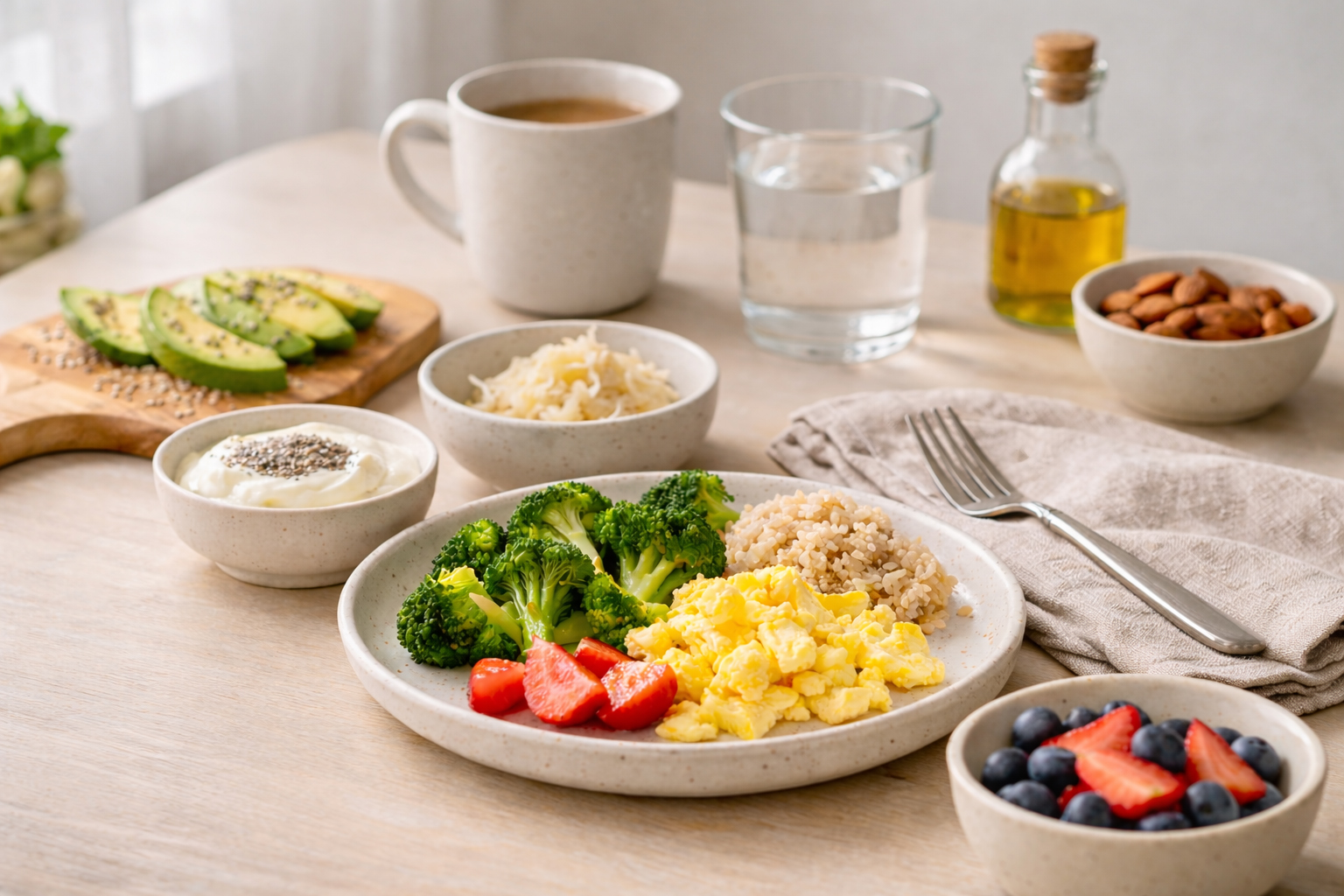
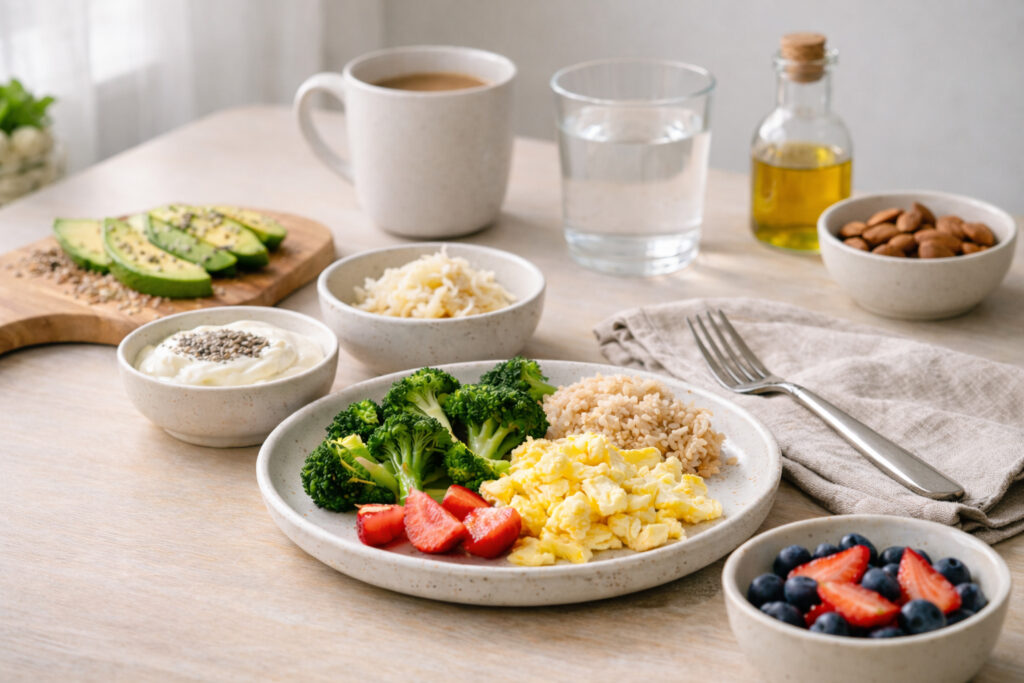
Many women find digestion feels more settled with:
- Cooked vegetables
- Simple protein sources
- Fiber paired with protein or fat
- Small amounts of fermented foods
Cooking methods matter too. Lightly cooked foods often feel easier to digest than raw foods, especially during stressful periods.
Why Consistency Often Matters More Than Variety
Variety is usually encouraged, but digestion sometimes responds better to familiarity. Rotating a small set of meals can help the gut feel more predictable and calm.
That doesn’t mean eating the same thing forever.
It means giving the gut a chance to relax.
Movement and Gut Health
Movement supports digestion by improving circulation and helping the body stay regular. This doesn’t require intense workouts.
Upright, low-impact movement often feels especially supportive. Simple routines—like those in a [Standing Workout post]—can help digestion without putting extra stress on the body.
Hydration and Digestive Support
Hydration supports digestion quietly. Drinking fluids consistently throughout the day tends to work better than drinking large amounts at once.
Many women also notice that warm or room-temperature drinks feel gentler on digestion, particularly in the morning.
When Sitting Too Much Affects Digestion
Long periods of sitting can slow digestion. Even small changes—standing, stretching, or moving lightly—can help.
On days when energy is low, chair-based routines like those in the [Chair Exercises post] can still support circulation and digestive comfort.
Common Mistakes That Can Slow Digestive Progress
Gut health setbacks often come from trying to do too much.
Common patterns that don’t help:
- Cutting too many foods at once
- Adding several supplements at the same time
- Constantly changing routines
- Ignoring hunger signals
Digestion usually responds better to steady support than constant adjustments.
How Long It Takes to Notice Changes
Digestive changes tend to happen gradually.
Many women notice:
- Less bloating after a few weeks
- More predictable digestion over time
- Improved comfort as routines stabilize
Progress often looks quiet rather than dramatic.
How Gut Health Fits Into Overall Wellness
Gut health doesn’t exist in isolation. It works best alongside regular meals, gentle movement, adequate rest, and stress awareness.
When digestion feels supported, many women notice their bodies feel calmer and more resilient overall.
A Gentle Closing Thought
Supporting gut health isn’t about control. It’s about listening, consistency, and patience. When the body feels safe and nourished, digestion often becomes quieter and easier to trust.
Over time, those small, supportive habits tend to matter more than any quick fix.